


Why Integrated X-Ray Baggage Scanners are Your Facility’s Lifeline in 2026
February 18, 2026
What is a CCTV Solutions Company
March 23, 2026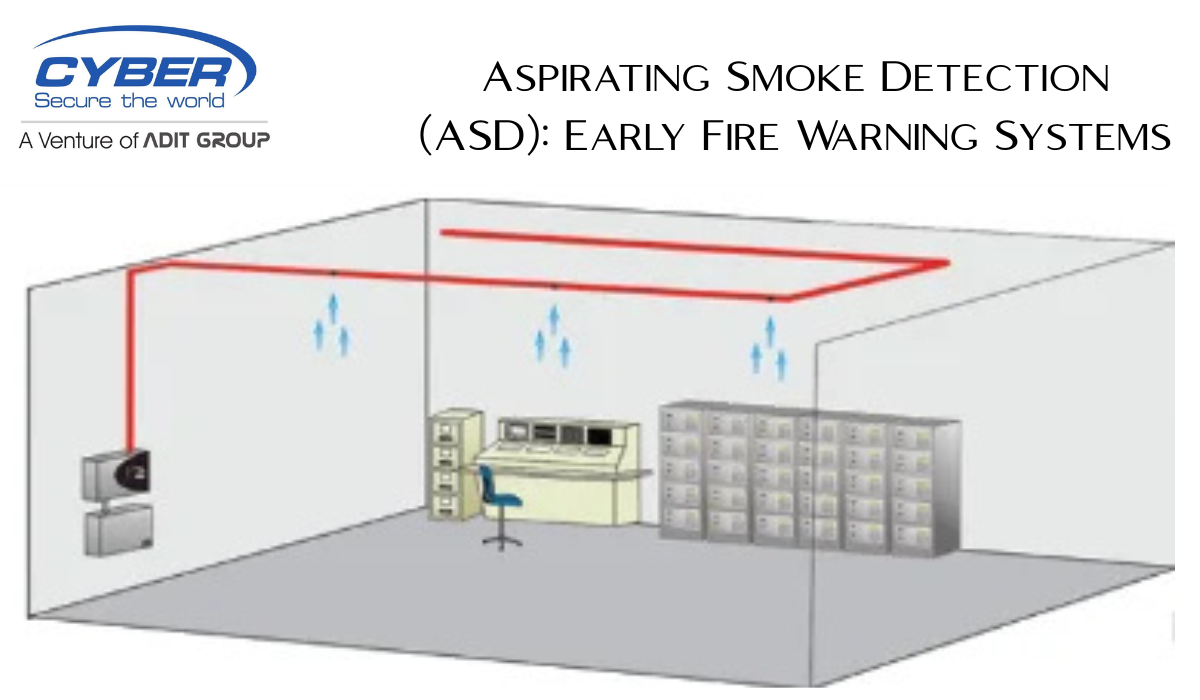
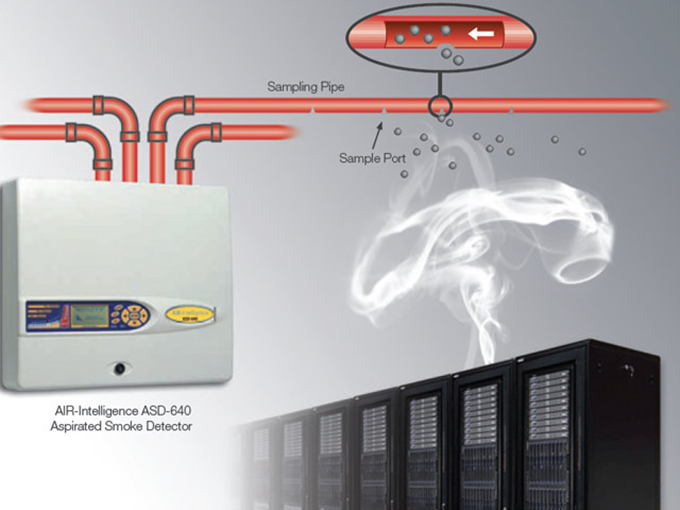
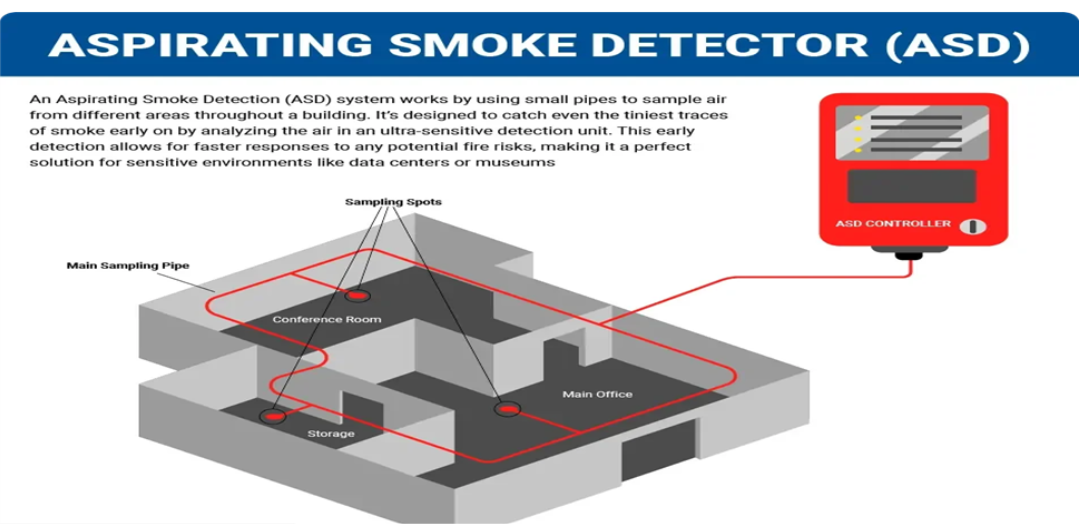
In industrial and commercial buildings, Aspirating Smoke Detection (ASD) systems are increasingly favored for their early warning capabilities. Unlike ordinary point smoke detectors, ASD uses a network of small perforated pipes to continuously sample air from the protected area. A powerful fan (aspirator) actively draws air through these pipes into a central detector module, which uses a highly sensitive optical (laser or LED) chamber to analyze the sample for smoke particles. In practice, this means ASD can detect the very first signs of smoldering combustion – often before any smoke is visible – by sensing minute particles. When smoke levels exceed a set threshold, the ASD panel issues an alarm (often with two levels: an early alert and a full alarm) to give building operators precious extra seconds to respond.
How does ASD work? Simply put, pipes are laid out under the ceiling or around machinery, with sampling holes spaced much like conventional detectors (typically covering ~900 sq ft per hole, similar to 30-foot spacing). The aspirator pulls air through these holes at a high flow rate, ensuring even well-ventilated or high-airflow areas (like data center rooms or warehouses) are monitored. Inside the detector, lasers or photodiodes count smoke particles (often down to 0.005% obscuration). Because the system can be tuned for different sensitivity levels, it allows very early detection of smoldering fires while filtering out dust or ambient particles. In short, the ASD module “sniffs” air continuously – an advantage especially in large or complex spaces where smoke might bypass spot detectors.
Image: An ASD system’s aspirator unit continuously samples air through a network of ceiling pipes for smoke.
Why Use ASD? Key Benefits
- Ultra-Early Fire Detection: ASD catches fires in the incipient (smoldering) stage, potentially minutes earlier than spot detectors. This early warning is critical in sensitive areas (IT rooms, archives, museums, cold storage) because modern fires escalate rapidly. Research shows fires fueled by synthetic materials now drop escape time from ~17 minutes (in the past) to under 3 minutes, making prompt detection vital. ASD’s sensitivity means even the tiniest smoke – invisible to standard detectors – triggers an alarm, giving more time to investigate.
- Large Area Coverage: One ASD unit with its pipe network can cover vast areas, making it cost-effective for big facilities. As Johnson Controls notes, an ASD system can often protect an entire data hall or warehouse with a single detector unit, as opposed to dozens of spot detectors. This “multiple inlet” advantage reduces equipment and installation cost for large zones.
- Performance in Challenging Environments: High-ceiling or high-airflow spaces pose problems for conventional detectors (smoke may not reach them quickly). ASD, however, actively samples air and is unaffected by airflow patterns. For example, in data centers with powerful cooling fans, or in open warehouses with large volumes, ASD will still pull smoke particles into the detector. Similarly, ASD excels in special environments – it’s the preferred solution for places like deep-freeze cold storage, where temperatures are very low. (Conestoga Cold Storage, for instance, uses WAGNER TITANUS ASD and has reliable smoke detection at –40 °C.)
- Reduced False Alarms: While very sensitive, modern ASD systems can distinguish between harmless dust and actual smoke. Advanced algorithms and filtration ensure false alarms stay low. Zones less prone to smoke can be set to lower sensitivity, while high-risk zones (server racks, batteries) run at maximum sensitivity. The result is confident detection of real fires without nuisance alerts.
- Flexibility and Control: ASD sensitivity and alarm thresholds are fully programmable, and many systems support two-stage alarms. You can configure an initial “warning” level at low smoke density and a full alarm at higher density. This allows, for example, a situation where building staff gets notified of a potential issue before an actual fire alarm is sounded. In practice, the first stage might trigger an investigation (maybe just flashing lights), and the second stage triggers evacuation. Multi-stage alarms align with modern fire codes and give facility managers additional response time.
- Centralized Maintenance: All smoke sensing happens at the central detector, so maintenance is easier. Instead of climbing multiple lifts to replace or clean spot heads, technicians service one detector and filter at ground level. WAGNER highlights this “central monitoring” as a major advantage. (The detectors even self-check for pipe blockages, alerting you to any issues.)
Question: “In which situations is ASD most useful?” ASD is especially beneficial wherever early detection is critical or space is difficult: data centers, server rooms, telecom shelters, cleanrooms, large auditoriums, storage facilities, historical archives, cold storage, tunnels and basements. For example, in telecommunications relay rooms in India, aspirating detectors are explicitly specified for early smoke detection. In short, use ASD when you need “fire detection before fire” – such as catching electrical faults or smoldering wires before flames break out.
Technical Standards and Codes
Aspirating systems must comply with fire codes. In the US, NFPA 72 (Fire Alarm Code) covers ASD. It treats each sampling hole like a traditional detector (~900 ft² coverage) and limits air transport time (max 120 sec for standard protection). Stricter standards exist for critical facilities: NFPA 75/76 (for IT/telecom) define “Early Warning” (EWFD) with 90 sec max transport and 400 ft² per inlet, and “Very Early Warning” (VEWFD) with 60 sec and 200 ft². In practice, designers use these codes to size pipe layouts and fan speed. Internationally, UL 268 (National Fire Alarm Standard) now includes enhanced smoldering detection requirements; modern ASD panels support the newer two-stage alarm scheme consistent with UL 268 Seventh Edition. In India, there is no specific ASD standard in the National Building Code 2016, but aspirating systems are implicitly recognized under general fire detection requirements. Notably, some Indian technical specifications (e.g. for railway installations) explicitly mandate ASD in high-risk rooms for early detection. This reflects a broader trend: early-warning systems like ASD are considered best practice in sensitive installations.
Case Study: Conestoga Cold Storage
To illustrate ASD’s value, consider Conestoga Cold Storage in Canada. They store 2.4 million m³ of frozen goods, operating at –30 to –40°C. Conventional detectors struggle in that environment, so Conestoga installed WAGNER TITANUS ASD systems. The ASD pipes run through the freezer aisles and use specially certified detectors. The result: “extremely reliable and a key component of our fire protection”, as Conestoga’s VP notes. They highlighted the early smoke detection capability as essential for protecting equipment, products, and employees. The system met NFPA 72 standards even in deep freeze and proved “false alarm-proof” while offering continuous monitoring.
Limitations and Considerations
ASD is not magic – it has trade-offs. Because it draws all area air through a central unit, maintenance is critical. Filters and detectors must be kept clean; otherwise sensitivity drifts. In very dusty or polluted sites, frequent filter changes (every few months) are needed to avoid clogging. Also, ASD initially costs more than a simple point detector, so it’s typically justified only where early detection saves much more (data centers, heritage sites, high-value inventory). Another consideration is noise – the aspirator fan produces a low hum, which may matter in quiet areas. Careful design and placement can minimize that. Finally, ASD designs must be well-calculated: the spacing and air flows require engineering (e.g., using pipe sizing software like “ASPIRE”) to meet code transport time limits.
Integration and Control
In modern smart buildings, ASD systems can connect seamlessly with other safety systems. The detector panel behaves like any fire-alarm control panel – it outputs alarms, faults, and supervisory signals to the building’s fire panel. It can also interface with Building Management Systems (BMS). For example, WAGNER notes that their TITANUS detectors “can be integrated into a centralized building management system”. This allows facility staff to view ASD status on a central dashboard and even receive mobile alerts. Two-way integration means you can trigger HVAC shutdown or fire dampers when an ASD alarm occurs, just as with any fire alarm. Essentially, installing ASD does not isolate you – it augments your existing alarm network. You still have audible/visual alarms, sprinkler triggers, and manual overrides as usual; ASD just provides those signals earlier.
How to Choose an ASD Provider
Selecting a supplier/installer for ASD involves checking a few things: – Expertise with ASD Technology: Ensure the provider is familiar with aspirating systems and code requirements. They should survey your space, consider airflow patterns, and plan pipe routes to meet NFPA timing.
– Brands & Compliance: Reputable brands like Xtralis VESDA, Honeywell/VESDA, WAGNER TITANUS, or FireClass should be considered. Make sure the products are UL or BIS certified for fire use.
– Design Services: A good vendor (like Cyber Info Electronics) will use design software to calculate sensitivity and coverage, rather than guess. They should demonstrate the expected alarm thresholds and response times.
– Maintenance Support: Look for service plans. ASD systems need annual check-ups and occasional filter changes. The vendor should offer training for your staff on how to respond to different alarm levels.
– Integration Capability: Confirm that the ASD panel will tie into your current fire alarm and BMS, if needed. Some advanced systems can also link to IP networks for remote monitoring.

Conclusion & Next Steps
Aspirating smoke detection is a cutting-edge solution for achieving the earliest possible fire warning in challenging settings. It is widely adopted in data centers, warehouses, cold storage, auditoriums, and telecommunication sites worldwide. With customizable sensitivity and centralized monitoring, ASD systems can dramatically improve fire safety – an advantage that global organizations and even Indian institutions are recognizing.
If you manage a sensitive facility and want to explore ASD, Cyber Info Electronics Security System Pvt. Ltd. can help. We design and install advanced fire detection systems, including ASD, fully integrated with your fire alarm and BMS. Contact us for a free assessment, and we’ll tailor an ASD solution to your site’s needs. Early warning could save lives and assets – don’t wait for the smoke to rise.Sources: Authoritative industry sources and case studies were used. Key details on ASD operation and advantages are drawn from fire protection experts. Installation requirements and code references follow NFPA guidelines. Local context (e.g. Indian railway specs) is noted for relevance, and real-world examples (e.g. Conestoga Cold Storage) illustrate benefits. These inform our recommendations for ASD deployment.