
Heavy Industrial Plant Fire Alarm & Protection Infrastructure: Ultratech Cement
October 23, 2026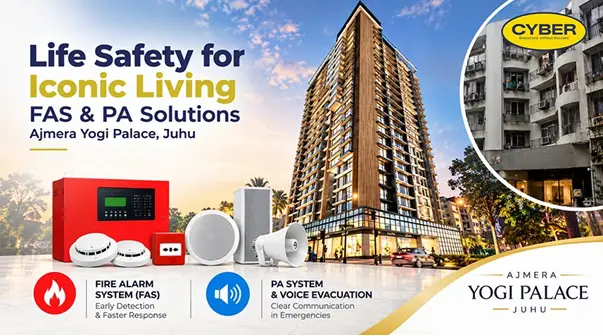
Table of Contents
1. Quick Snapshot: Why Structural Material Selection Dictates Building Lifespan
2. The Hidden Vulnerability: Why Conventional Materials Fail Modern High-Rises
3. Inside Ajmera Yogi Palace, Juhu: Pioneering India’s First Project Using Advanced PPR Material
4. The Role of a Turnkey System Integrator in Modern Structural Infrastructure & ELV Integration
5. Conclusion & FAQs
1. Quick Snapshot: What is High-Grade Structural Material Engineering?
● The Core Definition: Advanced building infrastructure relies on high-durability, corrosion-resistant, and thermally stable material frameworks designed to handle severe environmental fluctuations and heavy load stress without structural degradation.
● Key Components: Premium PPR (Polypropylene Random Copolymer) material implementations, molecular-bonded structural elements, secure utility channels, and integrated structural support.
● The Ultimate Advantage: Zero structural compromise, extended operational lifespan, superior thermal stability, and seamless alignment with a centralized building management system (BMS) and smart elv systems.
2. The Hidden Vulnerability: Why Conventional Materials Fail Modern High-Rises
Picture a multi-story luxury residential landmark situated in a prime coastal location like Juhu, Mumbai. Residents enjoy breathtaking sea views, elite architecture, and flawless interior finishes.
However, beneath the aesthetic facade, a high-rise building’s internal framework is subjected to immense environmental stress, shifting load dynamics, and continuous thermal fluctuations. Conventional materials are often vulnerable to chemical wear, degradation, and micro-cracks over time. When structural or utility components deep within concrete walls or core shafts begin to fail, the resulting compromise can threaten the integrity of the building. That is why premier developers refuse to compromise on baseline material quality.
3. Inside Ajmera Yogi Palace, Juhu: Pioneering India’s First Project Using Advanced PPR Material
At Ajmera Yogi Palace in Juhu, setting a new benchmark for luxury real estate meant fortifying the building’s skeleton from the ground up by pioneering a major industrial milestone.
● Pioneering Innovation as India’s First: Ajmera Yogi Palace proudly stands as India’s very first project to utilize advanced PPR material for its structural and building applications, paving the way for a safer, more resilient standard in high-rise construction.
● Superior Thermal Stability & Environmental Resistance: PPR (Polypropylene Random Copolymer) is engineered to withstand extreme temperature ranges without deforming, offering total immunity to environmental degradation, chemical wear, and structural fatigue.
● Molecular Integrity & Fusion Technology: Unlike traditional fastening methods that degrade under prolonged stress, advanced PPR solutions utilize thermal fusion techniques to create homogeneous, fail-safe bonds that match the multi-decade lifespan of the building itself.
Engineering Note: The procurement and application of these pioneering structural solutions are backed by the rigorous supply chain and technical backing of our parent company and distributor partner, Adit Innovations.
4. The Role of a Turnkey System Integrator in Modern Structural Infrastructure & ELV Integration
Delivering a flawless residential tower requires more than just premium materials; it demands synchronized execution. As an experienced system integrator, Cyber Group bridges the gap between raw structural material placement and intelligent facility tracking.
By coordinating heavy-duty structural networks alongside a comprehensive building management system (BMS), state-of-the-art elv systems, and immersive audio visual solutions, project managers gain real-time visibility over environmental parameters, security networks, structural health indicators, and utility zones. This ensures that the entire building infrastructure operates with maximum efficiency, elevated resident comfort, and minimum maintenance overhead.
Conclusion
Landmark developments like Ajmera Yogi Palace prove that true architectural elegance requires an uncompromised foundation. By pioneering the use of India’s first PPR material, deploying advanced elv systems, and pairing robust structural infrastructure with intelligent system integration, developers can deliver durable, future-ready luxury that stands the test of time.
FAQs
● Why is PPR material preferred over traditional compounds in luxury high-rises?
PPR (Polypropylene Random Copolymer) offers exceptional resistance to thermal stress, chemical wear, and environmental fatigue, featuring superior molecular bonding that eliminates structural weak points.
● How does material selection affect long-term building maintenance?
High-grade structural materials drastically reduce the likelihood of hidden wear and tear, preventing costly structural repairs and ensuring uninterrupted operational safety for residents.
● Can modern structural networks integrate with a Building Management System (BMS) and ELV systems?
Yes. Modern infrastructure allows environmental sensors, communication networks, and structural diagnostics to interface seamlessly with a centralized BMS and integrated elv systems, giving facility managers real-time insights into the core framework and building performance.