IP-Based and Intelligent PA System Solutions for Smart Buildings
October 10, 2025
More Than Just a Siren: Why Expert Fire Alarm System Installation Saves Lives and Businesses
December 18, 2025
Imagine this: It’s rush hour at your corporate park, and a line of 50 cars is backed up, all waiting to enter. Every vehicle needs its access card checked. A standard barrier takes 6 seconds to open and close. That small delay adds up to massive congestion, lost time, and frustrated employees.
That’s where the power of the High-Speed Automatic Boom Barrier System comes in.
At Cyber Info Electronics Security System Pvt Ltd, we understand that security can’t slow down business. As a leading ELV System Integrator, we see the boom barrier not just as a mechanical gate, but as the essential, high-speed bottleneck in your entire access control network.
Ready to see how fast, smart barriers can transform your security and traffic flow? Let’s dive in.
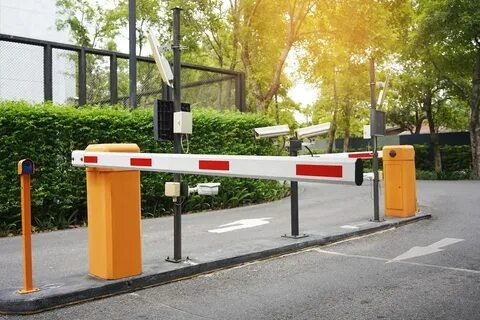
What is a High-Speed Boom Barrier, Really?
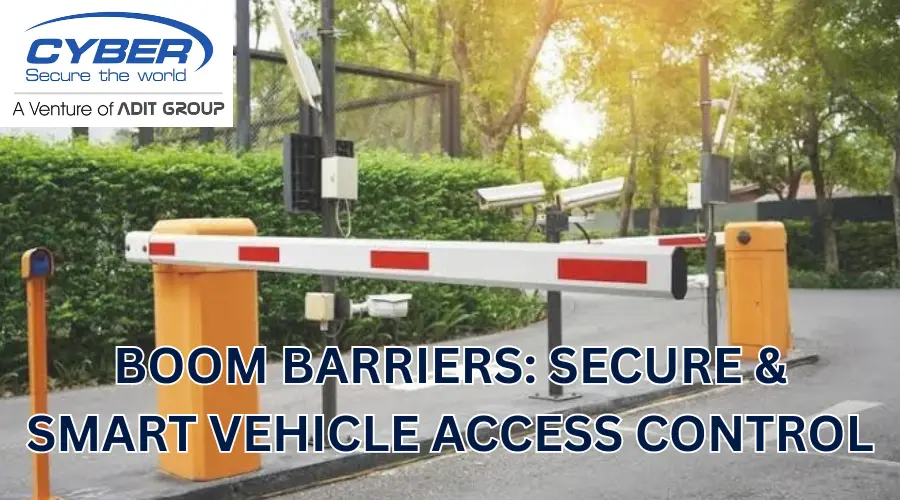
We see boom barriers everywhere—parking lots, gated communities, toll plazas. But a High-Speed Boom Barrier is a specialized piece of equipment designed for one critical purpose: handling heavy traffic volume with maximum security and minimum delay.
It’s All About the Motor
Traditional barriers use standard AC motors that are powerful but slower. High-speed barriers leverage advanced motors, often Servo or high-torque BLDC (Brushless DC) motors.
- The Difference is Speed: While a standard barrier takes 4 to 6 seconds to open or close, a true high-speed barrier can complete a full cycle (up and down) in as little as 0.3 to 1.5 seconds, depending on the boom arm length.
- The Key Components:
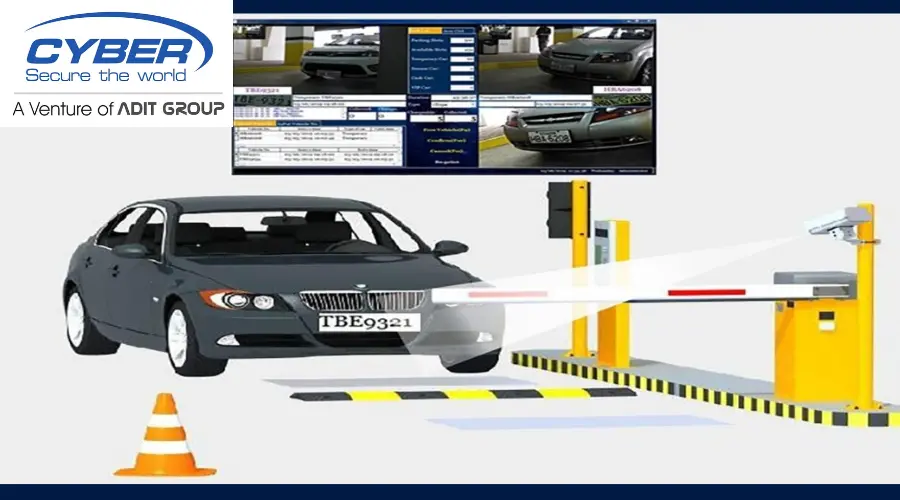
- The Brain (Control Unit): A smart logic board processes signals from your Access Control System (RFID, ANPR) almost instantaneously.
- The Muscle (Motor): High-speed motors with high torque ensure rapid, smooth movement.
- The Safety Mechanism: Crucial safety features like anti-crash sensors and optimized braking prevent the arm from causing damage despite the high speed.
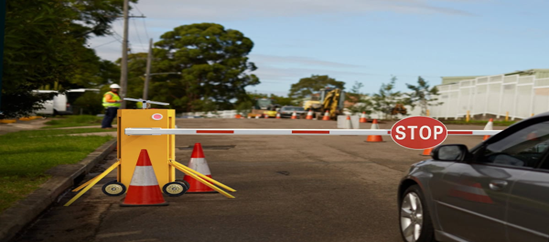
Why High-Speed is Non-Negotiable for Modern Security
Security and traffic efficiency are two sides of the same coin. A slow barrier compromises both.
1. Eliminating the Queue, Boosting Efficiency
Think about a high-volume entry point, like a factory gate or a busy commercial building.
- Real Stat/Example: A high-speed barrier operating at a 1.5-second cycle time can handle nearly 40 cars per minute (2,400 cars per hour). By contrast, a 6-second barrier manages only about 10 cars per minute. This is a 4x improvement in throughput!
- The Benefit: Faster vehicle processing means less congestion on public roads, happier employees, and an immediate perception of efficiency and professionalism.
2. The End of Tailgating: Enhanced Security
The gap between one vehicle exiting and the next one entering is a critical security vulnerability known as tailgating (or piggybacking).
- How High-Speed Solves It: Because the high-speed barrier closes almost instantly behind an authorized vehicle, it dramatically shrinks the window of opportunity for an unauthorized vehicle to sneak in right after.
- The Integration Edge: When integrated with Inductive Loop Detectors and Safety Photo Cells, the barrier acts as a physical gatekeeper, ensuring strict one-vehicle-per-authorization access.
3. Maximum Reliability, Minimum Downtime
High-speed doesn’t mean fragile. These systems are built for endurance.
- Durable Design: High-quality barriers use robust materials and are engineered for millions of operational cycles. They are built to withstand the continuous, heavy use of high-traffic areas like toll plazas and logistics hubs.
- Cost-Effective in the Long Run: Less downtime for repairs means lower operational costs and better ROI (Return on Investment).
The ELV Advantage: How Cyber Info Integrates Your Barrier
A boom barrier doesn’t work alone. As an ELV (Extra-Low Voltage) System Integrator, Cyber Info specializes in making your boom barrier system the seamless physical endpoint of a powerful digital network.
Seamless Integration Scenarios
| Access Method | The Cyber Info Integration | Benefit for You |
| Long-Range RFID | Tag reader connects to the barrier’s control unit via a secure network cable. | Touchless Access: Employee cars with RFID tags are recognized 5 meters away; the barrier opens and closes before they stop. 0 Delay! |
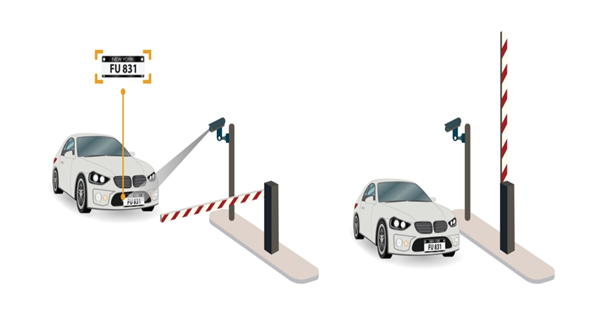
| ANPR (Number Plate) | ANPR Camera captures the license plate, sends data to a server, which authorizes the entry, and sends the signal to the barrier. | Visitor/Contractor Control: Manage temporary or guest vehicles without handing out physical cards. Creates a detailed vehicle log for audit. |
| Parking Management | Boom barrier links to a ticket dispenser or parking count system. | Revenue & Control: Barrier only opens after ticket insertion or fee payment, ensuring accurate inventory and revenue management. |
Case Study Snapshot: Streamlining Logistics
A major logistics park in Pune was struggling with an average 20-minute truck queuing time during peak entry hours.
- The Problem: Their old system had long boom arms (6 meters) driven by slow motors, taking 8 seconds to open. The guards had to visually verify every manifest.
- The Cyber Info Solution: We installed High-Speed Hydraulic Boom Barriers with a 3.5 meter arm and a 2.5-second open time, integrated with an ANPR system and a secure RFID UHF reader for registered trucks.
- The Result: The average wait time was reduced from 20 minutes to under 3 minutes. This significant efficiency boost saved the company 25 in idling fuel costs and dramatically improved driver satisfaction.
Optimizing Your Barrier: Questions to Ask
Choosing the right barrier is key. Here are the questions our clients often ask (and that Google loves!):
1. “Does a fast barrier break down easily?”
- Answer: No. High-speed barriers use precision engineering and sophisticated balancing springs. They are designed for high-cycle usage, often rated for millions of operations. Regular preventive maintenance is all they need to run flawlessly.
2. “What if the power goes out?”
- Answer: Modern automatic barriers come standard withAutomatic Boom Barrier Systemsystem. In the event of a power failure, the barrier can perform dozens, sometimes hundreds, of cycles before needing a recharge, ensuring continued security. Manual release mechanisms are also included for emergencies.
3. “How fast should my barrier be?”
- Answer: It depends on the application:
- Toll Plaza/Highway: You need 0.3 to 1.0 second (Ultra-Fast).
- Corporate/Residential: 1.5 to 2.5 seconds is ideal for balancing speed and smoothness.
- Low-Traffic Area: 3 to 6 seconds is sufficient.
The Future is Seamless Access
The modern security landscape demands speed and intelligence. The High-Speed Automatic Boom Barrier is no longer just a barrier; it’s a critical data collection point and a crucial component of your integrated ELV ecosystem.
At Cyber Info Electronics Security System Pvt Ltd, we deliver solutions that are not only secure but also smart and scalable. We ensure your security system works with your operations, not against them.Is your current entry system slowing down your business? Contact us today to discuss a high-speed boom barrier solution tailored for your traffic flow and security needs!