
iCAM Aspirating Smoke Detectors: Advanced Fire Detection Beyond the Ordinary
April 22, 2026
Top Fire Alarm System Companies in Ahmedabad
June 10, 2026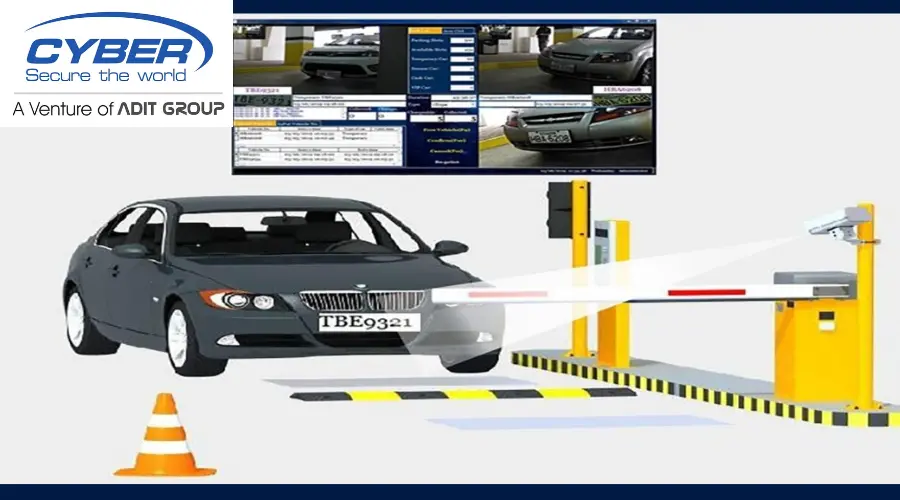
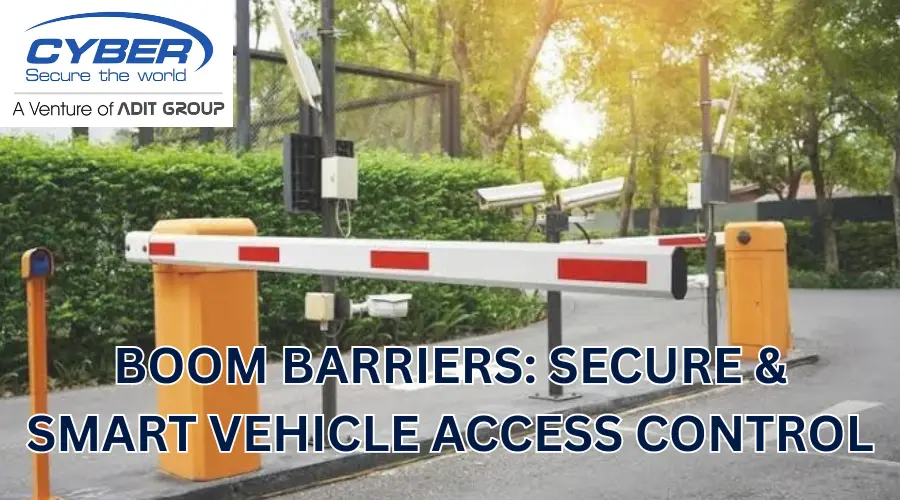
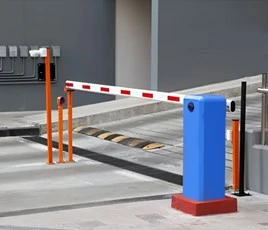
In bustling Ahmedabad, controlling vehicle entry is vital for parking lots, offices, societies and industrial sites. Boom barriers – the automatic gate arms you see at entrances – provide fast, reliable access control. They act as a movable arm that blocks or allows vehicles based on authorization. Modern boom barriers use sensors and controllers to raise or lower the arm automatically for permitted vehicles, dramatically reducing the need for manual guards. For example, Ahmedabad facilities often pair boom barriers with RFID or FASTag readers: an approaching car’s tag is scanned and, if approved, the arm lifts in under 2 seconds. This results in smooth traffic flow and strong security.
Boom barriers come in many configurations. Automatic barriers (fully motorized) are ideal for high-traffic areas like shopping malls or corporate complexes. They open quickly with one push-button or card access, and can integrate with systems like RFID, QR-code or ANPR (license-plate recognition). Semi-automatic barriers have motorized arms but require manual triggering (for medium-traffic sites). Manual barriers lack motors and are cost-effective for very low-traffic spots like small community parking. Many modern suppliers in Ahmedabad also offer smart features: built‑in optics for number-plate reading, emergency battery backup, and even integration with security cameras and intercoms. Regardless of type, these systems are built to work 24/7 – far more reliably than a human guard.
Why do businesses in Ahmedabad install boom barriers? The advantages are clear. First, they deter unauthorized access. A clear red-and-white gate arm sends an instant signal: “Stop – check at gate.” Studies and industry experts note that automated barriers cut down tailgating and vehicle theft by enforcing one-at-a-time entry. Second, boom barriers reduce staffing costs. Once installed, they handle thousands of cars without breaks – 24×7 – unlike human guards who need shifts and breaks. In fact, boom barriers can be more cost-effective in the long run: the initial equipment cost is often offset by savings on security personnel and fines for security lapses. Moreover, modern barriers are durable and low-maintenance. Good systems use weather-resistant materials (galvanized steel or aluminum) to withstand Ahmedabad’s heat and monsoons, and they include features like auto-reverse sensors to prevent accidents.
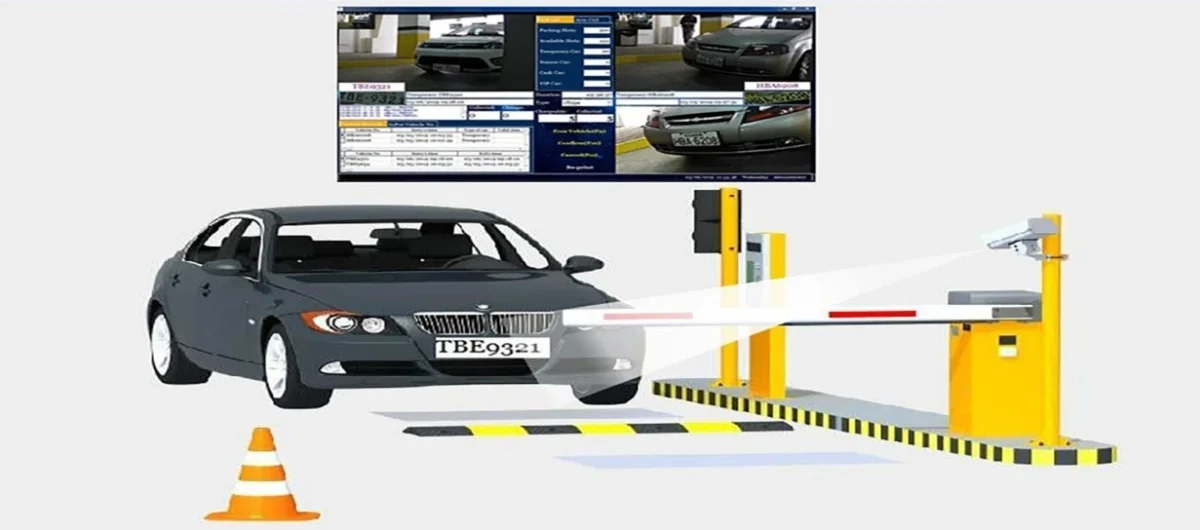
Boom barriers also streamline operations. Integrating a barrier with other systems lets your facility run smoothly. For example, card readers or biometric scanners can link to the barrier so only credentialed staff raise it. RFID tags or FASTags on vehicles allow instant hands-free entry. Some sites even use ANPR (Automatic Number Plate Recognition) cameras: the camera reads license plates in real-time and lifts the barrier for approved vehicles. This approach (used in places like smart parking and gated hotels) eliminates manual checks entirely and speeds up lanes. Secure India Solutions reports that at one 5-star hotel, installing high-speed boom barriers with RFID and ANPR cut manual intervention by 80% and drastically reduced guest wait times. That’s a dramatic boost in convenience – and security – for vehicles entering every day.
Types of Boom Barriers & Access Control
Boom barriers come in several models to suit your needs:
- Electromechanical Boom Barriers: These have electric motors driving the arm. They’re common and cost-effective for most uses (parking lots, offices). They usually have a spring-assist or counterweight to help balance the arm.
- Hydraulic Boom Barriers: Built for heavy-duty use (toll booths, industrial gates). They use hydraulic pistons to move even very long arms (up to 6–8 meters for a single arm, or 10–12m with dual arms) with consistent speed. Hydraulics can handle extreme temperatures and continuous cycles with minimal maintenance.
- Springless Boom Barriers: A newer design using no springs (often in “premium” models). These allow very fast opening/closing (sub-1s cycle) and smoother motion, at slightly higher cost. They’re great for busy sites like railway stations or airports.
- Articulated/Collapsible Boom Barriers: The arm folds in half (like a scissor) to fit under low-height ceilings or in trucks. Used in multi-story parking basements or indoor garages.
- Security Boom Barriers: Extra-robust models with thicker arms and foundations. Often crash-tested and used at high-security facilities (military, data centers). They may come in short, waist-high “flap barriers” or heavy arms with anti-ramming capability.
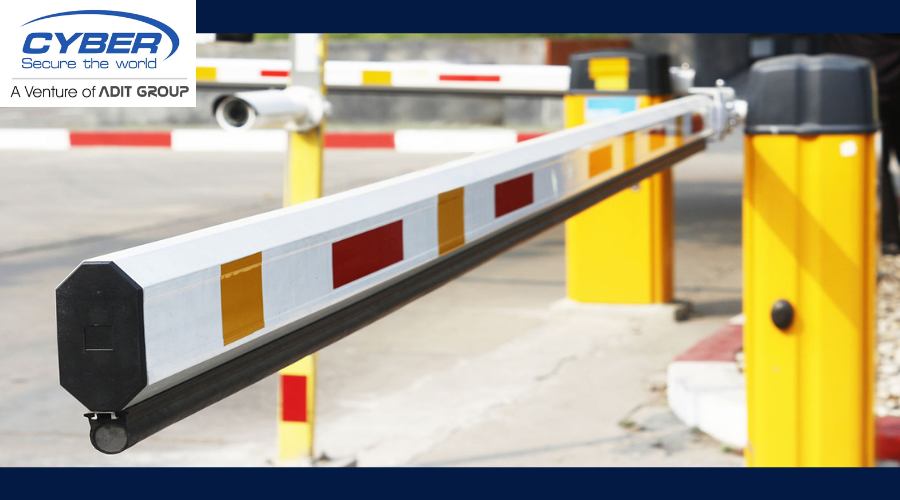
You’ll often see barrier arms in two styles: straight arms or telescopic arms (the arm sections slide to extend). Telescopic arms (hexagonal or rectangular) fit in low-clearance areas because they collapse into each other. Straight arms (solid aluminum or fiberglass) are simpler and cheaper.
Key Features & Specifications
When choosing a boom barrier, consider these factors:
- Arm Length: Common 3m–4m for parking and gates, 6m–8m for wide roads, and dual arms (up to 10m+) for express lanes. Ahmedabad businesses often use 4–6m arms.
- Operating Speed: Faster is better to reduce queues. Typical times range from 1–6 seconds for full raise/lower. High-end models can operate in ~1–2s. For very busy sites (like hospitals or metros), a <2s cycle is ideal.
- Materials & Durability: Outdoor barriers should be rust-resistant. Look for galvanized steel or aluminum arms, powder-coated surfaces, and IP-rated control boxes (IP54 or higher). For example, Park+ notes many systems use pre-galvanized steel + powder coating for corrosion resistance.
- Power Supply: Standard is 220–240VAC input, but battery-backed options keep it running during outages. Often 24V DC motors with smoothing inverters. Some models mention 24V brushless motors for efficiency.
- Safety Features: Essential include auto-reverse (the arm bounces back if it hits an obstacle) and loop detectors or infrared sensors that stop the arm if a car or person is in the way. Emergency manual override (a hand crank or button) is also crucial in case of power failure. These ensure compliance with safety norms.
- Integration Interfaces: Your barrier should integrate with your security ecosystem. Key features: built-in card/RFID reader or Wiegand input, dry contacts for connection to ANPR cameras or building management systems, network connectivity or IoT capabilities, and support for “trigger” inputs (from push buttons or intercom calls). For instance, Novus Automation highlights that its barriers support RFID, QR, FASTag and ANPR integration.
What about control mechanisms? You can pair barriers with: – RFID readers or proximity cards: Vehicles or drivers carry tags that the reader scans for entry.
– Keypads or intercoms: Visitor dials a code or calls security to open gate.
– ANPR cameras: Automatic license-plate scanning, ideal for fleets or VIP access.
– Wireless remotes: Simple remotes for security personnel or drivers.
Benefits of Professional Boom Barrier Installation
Investing in a quality boom barrier system pays off. Here’s why hiring an expert integrator matters:
- Proper Siting & Calibration: A specialist ensures the barrier arm and sensor are positioned correctly, preventing malfunctions and minimizing blind spots. They’ll calibrate speed and sensitivity so that the barrier stops safely yet doesn’t interfere with normal traffic flow.
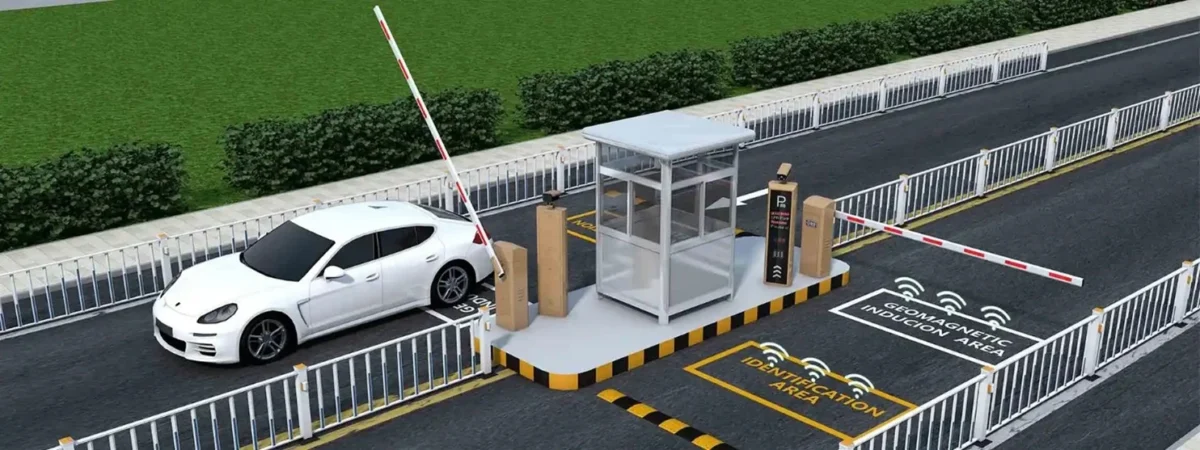
- Seamless System Integration: Professionals will connect the barrier to your existing security setup. For example, we can link the boom barrier to your CCTV (so cameras auto-record when the arm opens), to alarms (arm lock if intrusion detected), or to attendance software (logging vehicle entries). A holistic setup means better monitoring and faster response.
- Certifications & Compliance: Experienced suppliers know local regulations. They can ensure your barrier meets standards for safety (like BIS/ISO certifications) and any municipality rules. In Ahmedabad, high-security sites may need certified crash barriers. We’ll also advise on features like emergency breakaway arms to meet fire code or airport security norms.
- Reliable Support & Warranty: A reputable supplier offers warranty service and maintenance. Boom barriers have many moving parts; regular greasing, firmware updates, and sensor checks keep them running. Cyber Info’s technicians can perform periodic checks and are just a call away if a barrier stalls.
- Future Expansion: As your needs grow, the right installer will size the power and network capacity to add more barriers later, or upgrade to advanced control panels. For example, if you want to add more RFID lanes in a colony later, we can pre-plan conduits and IP networks. This avoids reinstalling pipes or recabling down the line.
Local Insights & Case Example
Ahmedabad’s growth as a business hub has spurred demand for access control. Many residential societies, hotels and corporate campuses now use boom barriers as a standard. For instance, Secure India Solutions reports on a 5-star hotel (not in Ahmedabad, but illustrative) where automatic boom barriers with RFID and ANPR cut valet wait times by 80%. Closer to home, Novus Automation (an Ahmedabad supplier) lists local projects – Godrej Society on SP Ring Road, a major hotel and industrial parks – as beneficiaries of their barrier systems. These cases highlight that integrated barriers are becoming an expected amenity.
Additionally, urban regulations and initiatives support this trend. Modern parking management guidelines favor barrier systems for automated control. For example, many new IT parks and hospitals in Gujarat require automated entry with RFID for security compliance. Installing a barrier system can also qualify you for insurance discounts, much like CCTV (as insurers see them as lower-risk). Cyber Info’s clients often remark that after adding boom barriers, incidents like stray vehicles or tailgating practically vanish overnight.