
Gate Automation Solutions Building Smarter Safer and More Efficient Entrances
August 30, 2026
Flap Barrier Gates Smart Pedestrian Access Control for Modern Facilities
September 29, 2026Table of Contents
- Why Commercial Kitchens Face Higher Fire Risks
- What Is a Kitchen Fire Suppression System
- Why Water Alone Is Not Enough
- How Kitchen Fire Suppression Systems Work
- Key Components of a Kitchen Fire Suppression System
- Where Kitchen Fire Suppression Systems Are Used
- Benefits of Installing Kitchen Fire Suppression Systems
- Integrating Kitchen Fire Suppression with Building Fire Safety
- Choosing the Right Kitchen Fire Suppression System
- Conclusion
- FAQs
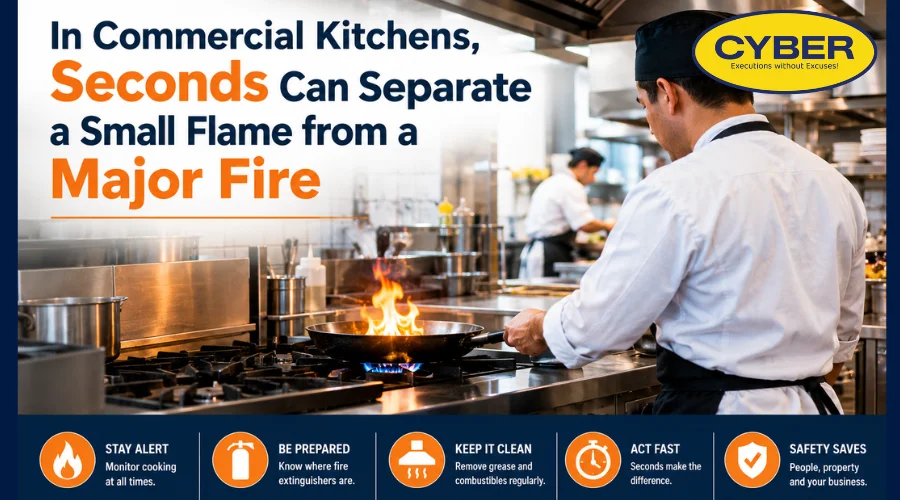
Commercial kitchens operate in environments where high temperatures, open flames, cooking oils, grease vapours, and continuously operating cooking appliances are present throughout the day. While these conditions are essential for food preparation, they also create fire risks that differ significantly from those found in most other occupancies.
Unlike ordinary combustible fires, fires involving cooking oils and grease can spread rapidly through cooking appliances, exhaust hoods, grease filters, and ductwork. Once flames extend into the kitchen exhaust system, controlling the fire becomes more challenging and the potential for property damage increases. For this reason, restaurants, hotels, hospitals, industrial canteens, educational institutions, cloud kitchens, catering facilities, and food processing kitchens commonly install Kitchen Fire Suppression Systems that are specifically designed for commercial cooking hazards.
Unlike clean agent or inert gas total flooding systems that protect enclosed rooms, Kitchen Fire Suppression Systems use specially formulated wet chemical suppression agents designed for fires involving commercial cooking oils and grease. These systems automatically detect fire conditions and discharge the suppression agent directly over the protected cooking equipment, exhaust hood, and associated ductwork.
Why Commercial Kitchens Face Higher Fire Risks
Commercial cooking areas operate continuously during service hours, exposing equipment to sustained heat, grease accumulation, cooking oils, electrical appliances, and gas fired equipment.
Over time, grease deposits may accumulate within exhaust hoods, grease filters, and ductwork. If a fire develops on a cooking appliance and reaches these deposits, flames can spread beyond the original cooking surface into the exhaust system.
Another important consideration is that conventional portable fire extinguishers or water are not always appropriate for fires involving hot cooking oils.
When water contacts burning cooking oil, it rapidly converts to steam and can eject burning oil droplets, increasing the size of the fire and creating additional hazards for kitchen personnel.
These characteristics make commercial kitchens a unique fire protection environment requiring dedicated suppression systems designed specifically for cooking hazards.
What Is a Kitchen Fire Suppression System
A Kitchen Fire Suppression System is a permanently installed automatic fire protection system developed specifically for commercial cooking operations.
The system protects appliances such as
● Deep fryers
● Griddles
● Ranges
● Charbroilers
● Salamanders
● Cooking lines
● Exhaust hoods
● Exhaust ducts
Heat detection devices continuously monitor the protected cooking area.
When a fire condition is detected, the releasing mechanism activates the system and discharges a wet chemical suppression agent through carefully positioned discharge nozzles located above cooking appliances, exhaust hoods, and duct openings.
The suppression agent is formulated specifically for commercial cooking fires and helps suppress flames while reducing the likelihood of reignition.
Unlike portable extinguishers that depend on manual intervention, the system remains continuously ready to respond whenever required.
Why Water Alone Is Not Enough
One of the most common misconceptions is that water can safely extinguish every type of fire.
Commercial cooking oils frequently operate at temperatures well above the boiling point of water.
If water is applied directly onto burning cooking oil, it instantly converts into steam. This rapid expansion can project burning oil outward, allowing flames to spread quickly across surrounding cooking equipment and nearby surfaces.
Kitchen Fire Suppression Systems instead use a specially formulated wet chemical agent that reacts with hot cooking oils through a process commonly known as saponification.
This reaction forms a soap like layer across the oil surface while simultaneously cooling the cooking medium and helping reduce the possibility of reignition.
Because of this specialized suppression mechanism, wet chemical systems are widely used for protecting commercial cooking equipment where cooking oils and grease are present.
How Kitchen Fire Suppression Systems Work
A typical Kitchen Fire Suppression System operates automatically while also allowing manual activation through a manual pull station.
The sequence generally follows these stages.
Heat detection devices continuously monitor the protected cooking equipment.
When the preset operating temperature is reached, the releasing mechanism activates the suppression system.
The wet chemical suppression agent is discharged through nozzles positioned to protect cooking appliances, exhaust hoods, grease filters, and associated ductwork.
At the same time, the system is designed to isolate the fuel supply and disconnect the electrical energy sources serving the protected cooking appliances, helping remove the energy sources that could allow the fire to continue.
These interlocks are intended for the protected cooking equipment and should not be interpreted as shutting down all electrical circuits within the kitchen.
The operation of the kitchen exhaust and make up air systems should follow the approved system design, applicable fire protection requirements, and project specific sequence of operations.
Where required, alarm signals are transmitted to the fire alarm system so that occupants and emergency responders can be notified according to the approved fire safety strategy.
This coordinated sequence helps control the fire during its early stages while supporting a structured emergency response.
Key Components of a Kitchen Fire Suppression System
Although configurations vary according to kitchen layout and cooking equipment, most systems include the following components.
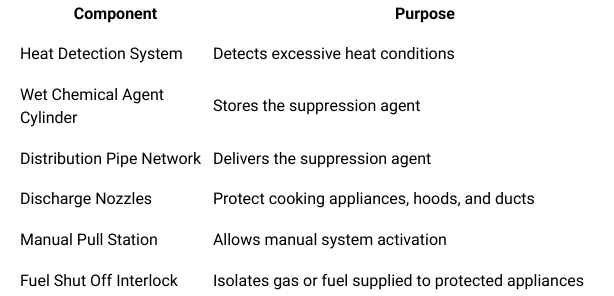
Together, these components provide coordinated protection for commercial cooking operations.
Where Kitchen Fire Suppression Systems Are Used
Kitchen Fire Suppression Systems are commonly installed in
● Hotels
● Restaurants
● Food courts
● Cloud kitchens
● Industrial canteens
● Hospitals
● Educational institutions
● Catering facilities
● Food processing kitchens
Each facility has different cooking equipment, hood arrangements, and operational requirements, making project specific system design an important part of implementation.
Benefits of Installing Kitchen Fire Suppression Systems
Installing a Kitchen Fire Suppression System provides several operational and safety benefits.
Because the system remains continuously active, it can respond automatically even when kitchen staff cannot immediately intervene.
The wet chemical suppression agent is specifically formulated for commercial cooking hazards, making it suitable for fires involving cooking oils and grease.
Automatic isolation of the fuel supply and the electrical energy serving the protected cooking appliances helps reduce the possibility of continued fire development after system activation.
By protecting cooking appliances together with exhaust hoods and ductwork, the system provides coordinated protection across the commercial cooking environment.
For many facilities, this contributes to reduced equipment damage, improved operational continuity, and enhanced life safety.
Integrating Kitchen Fire Suppression with Building Fire Safety
Modern commercial kitchens rely on several fire protection systems working together as part of an overall life safety strategy.
A Kitchen Fire Suppression System can interface with
● Fire Alarm Systems
● Smoke Detection Systems
● Building Management Systems BMS
● Emergency Notification Systems
● Fuel Shut Off Controls
● Centralized Monitoring Platforms
When the suppression system operates, the releasing mechanism activates the predefined safety sequence. The system communicates with the Fire Alarm System, allowing alarms and emergency notifications to be initiated in accordance with the approved fire protection design.
The suppression system also operates the required hardwired safety interlocks, including isolation of the fuel supply and disconnection of the electrical energy serving the protected cooking appliances.
Ventilation behavior should also follow the approved system design and applicable fire protection requirements. Depending on the project, the exhaust and make up air systems may continue operating or shut down according to the approved fire strategy and the Authority Having Jurisdiction requirements. These functions should follow the specified sequence of operations for the installation.
Although a Building Management System may monitor system status, display alarms, or record operational events, it should not replace the dedicated releasing mechanism, required hardwired interlocks, or the Fire Alarm System that perform the primary life safety functions.
Organizations developing comprehensive fire protection strategies often integrate kitchen fire suppression with broader fire alarm and monitoring infrastructure while maintaining the required hierarchy of life safety systems.
Cybergroup integrates Kitchen Fire Suppression Systems with fire alarm systems, centralized monitoring platforms, and building automation infrastructure, helping organizations develop coordinated fire protection solutions that align with project specific operational and life safety requirements.
Choosing the Right Kitchen Fire Suppression System
Selecting a Kitchen Fire Suppression System requires understanding the commercial cooking environment rather than simply choosing equipment.
Several factors should be evaluated before installation.
Cooking Appliances
The number and type of protected appliances directly influence nozzle placement, suppression coverage, and system configuration.
Cooking Media
Different cooking processes and cooking oils may influence the suppression system design and hazard assessment.
Hood and Duct Configuration
The dimensions and layout of exhaust hoods, grease filters, and ductwork affect nozzle placement and protection coverage.
Fuel Type
Whether appliances operate using gas or electricity determines the required safety interlocks and shutdown arrangements.
Ventilation System
Kitchen exhaust and make up air systems should be evaluated during system design so their operation follows the approved fire protection sequence after system activation.
Maintenance Accessibility
Detection devices, cylinders, nozzles, and manual pull stations should remain accessible for routine inspection, testing, and servicing.
Future Equipment Changes
Commercial kitchens frequently add or replace cooking appliances. The suppression system should be reviewed whenever equipment layouts change to ensure continued protection.
Proper engineering and installation help ensure that the suppression system continues to support both current operational requirements and future facility modifications.
Conclusion
Commercial kitchens present fire hazards that differ significantly from most other building environments.
Because cooking oils, grease, open flames, and continuously operating cooking equipment create specialized fire risks, dedicated Kitchen Fire Suppression Systems are designed specifically for these applications.
Using a specially formulated wet chemical suppression agent, these systems automatically detect fire conditions, discharge the suppression agent over protected hazards, isolate the fuel supply and electrical energy serving the protected appliances, and communicate with the building fire alarm system according to the approved fire protection strategy.
When properly engineered and integrated with the broader fire safety infrastructure, Kitchen Fire Suppression Systems contribute to improved life safety, reduced fire damage, and more effective emergency response in commercial cooking environments.
FAQs
What is a Kitchen Fire Suppression System
A permanently installed fire protection system designed specifically for commercial cooking equipment and grease related fire hazards.
Why are wet chemical agents used in commercial kitchens
They react with hot cooking oils, cool the surface, suppress flames, and help reduce the possibility of reignition.
Does the system shut down the entire kitchen electrical supply
No. The system is designed to disconnect the electrical energy serving the protected cooking appliances while isolating the associated fuel supply as required.
What happens to the kitchen ventilation system after activation
The operation of exhaust and make up air systems follows the approved fire protection design and project specific sequence of operations.
Can Kitchen Fire Suppression Systems integrate with Fire Alarm Systems
Yes. They commonly interface with Fire Alarm Systems, centralized monitoring platforms, and other approved building fire safety infrastructure.