

Kitchen Fire Suppression Systems Protecting Commercial Kitchens from Fire Risks
September 23, 2026
High-Rise Residential Turnkey Fire Safety: Lessons from Ajmera KalyanOne, Mumbai
October 15, 2026
Table of Contents
- Why Pedestrian Access Control Matters
- What Is a Flap Barrier Gate
- How an Automatic Flap Barrier Works
- Where Flap Barrier Turnstiles Are Commonly Used
- Benefits of Installing Flap Barrier Gates
- Integration with Access Control Systems
- Choosing the Right Flap Barrier Solution
- Conclusion
- FAQs
Flap Barrier Gates Smart Pedestrian Access Control for Modern Facilities
As buildings become more intelligent and security conscious, managing pedestrian movement has become just as important as controlling vehicle access. Corporate offices, airports, metro stations, educational institutions, hospitals, government facilities, and commercial complexes experience continuous movement of employees, visitors, contractors, and customers throughout the day.
Traditional security methods such as manual verification or unmanned entrances may not always provide the level of operational control required in busy environments. Organizations increasingly require solutions that allow only authorized individuals to pass through controlled entry points while maintaining an efficient flow of pedestrian traffic.
A Flap Barrier Gate is one such solution. Designed to regulate pedestrian movement through automated access control, it combines operational efficiency, user convenience, and controlled access within a compact entrance management system.
Why Pedestrian Access Control Matters
Every organization seeks to create a secure environment for employees, visitors, contractors, and customers. Achieving this objective requires more than simply locking doors.
Uncontrolled pedestrian movement can lead to overcrowding, unauthorized passage into restricted areas, and reduced visibility of visitor movement throughout a facility. Automated entrance management systems establish consistent access procedures while reducing reliance on manual verification.
A Flap Barrier Turnstile helps create an organized entry process where access is granted only after successful authentication. This controlled operation helps restrict and deter unauthorized passage while maintaining a smooth flow for authorized users.
What Is a Flap Barrier Gate
A Flap Barrier Gate is an automated pedestrian access control system that regulates entry and exit using retractable barrier flaps.
Unlike conventional doors or swing gates, the barrier remains closed until an authorized credential has been successfully validated.
Once authorization has been confirmed, the barrier flaps retract automatically, allowing a single authorized person to proceed through the lane before returning to the closed position.
Modern Automatic Flap Barrier systems are available in different cabinet designs, lane widths, and operating configurations to support corporate offices, transportation facilities, educational campuses, healthcare institutions, government buildings, and commercial developments.
How an Automatic Flap Barrier Works
An Automatic Flap Barrier operates through coordinated interaction between authentication devices, the Access Control System, the flap barrier lane controller, and the lane safety sensors.
The access sequence generally follows these steps.
The user presents an authorized credential such as an RFID card, biometric credential, QR code, mobile credential, or facial recognition.
The connected Access Control System controller or authentication terminal validates the credential. If authorization is successful, an opening command is transmitted to the flap barrier lane controller, which controls the movement of the barrier flaps.
The flaps retract, allowing the authorized individual to enter the controlled lane.
An integrated infrared or optical sensor array continuously monitors lane occupancy, travel direction, and passage completion throughout the movement.
The barrier flaps close only after the authorized user has completely cleared the protected closing zone, helping support both user safety and controlled access.
Many systems also include anti tailgating detection, obstacle sensing, and configurable bidirectional operation to improve both operational efficiency and security.
Where the flap barrier forms part of an approved means of egress, the design should provide the required fire alarm interface, emergency release, and fail safe egress behavior in accordance with the approved life safety design, product configuration, and Authority Having Jurisdiction requirements.
Where Flap Barrier Turnstiles Are Commonly Used
Flap Barrier Turnstiles are commonly installed wherever controlled pedestrian movement is required.
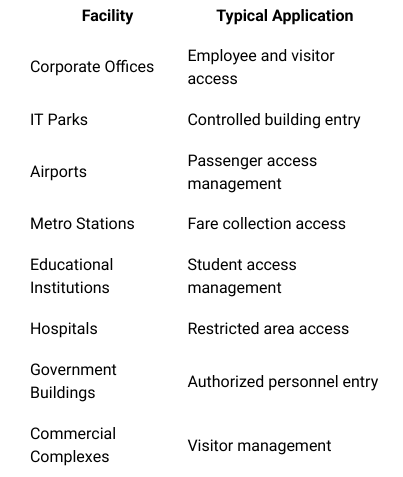
Because they support both controlled access and efficient pedestrian flow, flap barrier systems are suitable for both medium and high traffic environments.
Benefits of Installing Flap Barrier Gates
One of the primary advantages of a Flap Barrier Turnstile is its ability to combine controlled access with user convenience.
Unlike manually monitored entrances, automated barriers apply the same authentication rules consistently for every user.
This helps restrict and deter unauthorized passage while maintaining an organized flow of people during busy operating periods.
Many flap barrier systems also support configurable bidirectional operation, allowing entry and exit permissions to be managed independently when authentication readers and Access Control System logic are provided on both sides of the lane.
Another advantage is the professional appearance they provide. Modern flap barriers complement contemporary building architecture while delivering visible access control without creating an intimidating environment.
Because the barriers remain closed until successful authentication has been completed, organizations gain better control over pedestrian movement while supporting efficient access management.
Integration with Access Control Systems
Modern pedestrian entrance management relies on multiple technologies working together rather than operating independently.
A Flap Barrier Gate can integrate with
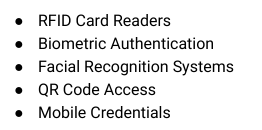
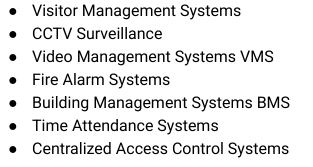
Each component performs a specific role within the overall access management architecture.
The Access Control System validates user credentials and determines whether access should be granted.
When authorization is successful, the Access Control System sends an opening command to the Flap Barrier Lane Controller, which controls the barrier flaps.
This separation of responsibilities helps ensure that authentication, access decisions, and physical barrier movement remain coordinated while being managed by their respective controllers.
Fire Alarm and Emergency Release Interface
Where a flap barrier forms part of an approved means of egress, emergency operation should follow the approved life safety design for the project.
A typical sequence involves the Fire Alarm Control Panel or approved emergency release interface sending a signal to the flap barrier emergency input.
The lane controller then places the barrier into the required safe condition, such as emergency opening or fail safe release, in accordance with the approved life safety design, product configuration, and Authority Having Jurisdiction requirements.
The required emergency behavior should always be determined during the system design stage and should comply with applicable regulations and project specific fire safety requirements.
Integration with CCTV and Video Management Systems
Modern flap barriers can also integrate with CCTV surveillance and Video Management Systems.
Simply recording video is different from true system integration.
In an integrated solution, access events such as Access Granted, Access Denied, Tailgating Detection, or Forced Passage generated by the Access Control System can be associated with the corresponding CCTV footage, video bookmarks, or operator alarms within the Video Management System.
This coordinated approach allows security personnel to review access events together with the relevant video evidence from a single monitoring platform.
Cybergroup integrates Flap Barrier Gates with Access Control Systems, CCTV surveillance, Video Management Systems, visitor management platforms, Building Management Systems, and fire safety interfaces to create connected pedestrian entrance management solutions.
Choosing the Right Flap Barrier Solution
Selecting the right Automatic Flap Barrier involves understanding both operational requirements and life safety considerations.
Several factors should be evaluated before implementation.
Pedestrian Traffic Volume
Facilities with heavy pedestrian movement require equipment capable of supporting higher throughput without compromising controlled access.
Authentication Method
Organizations should determine whether users will authenticate using RFID cards, biometric credentials, facial recognition, QR codes, mobile credentials, or other approved identification methods.
Lane Width and Accessibility
Lane dimensions should accommodate expected pedestrian flow while also considering accessibility requirements where applicable.
Installation Environment
Indoor and outdoor conditions, available entrance space, and environmental factors should all be considered when selecting equipment.
Integration Requirements
Organizations should evaluate integration with Access Control Systems, CCTV, Video Management Systems, visitor management platforms, time attendance systems, Building Management Systems, and fire alarm infrastructure.
Emergency Egress
Where flap barriers affect an approved escape route, the selected solution should provide the required fire alarm interface, emergency release, and fail safe egress behavior in accordance with the approved life safety design, product configuration, and Authority Having Jurisdiction requirements.
Future Expansion
Organizations planning additional entrances or future building expansion should consider equipment that supports scalable access management infrastructure.
Careful planning helps ensure that the selected flap barrier solution supports both present operational requirements and future facility development.
Conclusion
Managing pedestrian movement has become an important component of modern building security and operational management.
A Flap Barrier Gate provides a structured method of controlling pedestrian access while supporting operational efficiency and user convenience.
Working together with Access Control Systems, CCTV, Video Management Systems, visitor management platforms, and appropriate fire safety interfaces, flap barrier systems become part of a coordinated entrance management infrastructure rather than operating as standalone devices.
When properly designed and integrated, they help organizations manage pedestrian movement while supporting secure, efficient, and well organized facility operations.
FAQs
What is a Flap Barrier Gate
An automated pedestrian access control system that regulates entry using retractable barrier flaps.
Where are Flap Barrier Turnstiles commonly installed
Corporate offices, airports, metro stations, hospitals, educational institutions, government buildings, and commercial complexes.
How does a Flap Barrier Gate verify access
The connected Access Control System validates the credential and sends an opening command to the flap barrier lane controller after successful authorization.
Can Flap Barrier Gates integrate with CCTV and Video Management Systems
Yes. Integrated systems can associate access events, tailgating alerts, or forced passage events with corresponding CCTV footage and Video Management System alarms.
How do Flap Barrier Gates operate during an emergency
Where they form part of an approved means of egress, emergency operation should follow the approved fire alarm interface, emergency release, and fail safe egress behavior specified by the life safety design and Authority Having Jurisdiction requirements.
