

Boom Barriers: Secure & Smart Vehicle Access Control
June 14, 2026
Automatic Boom Barrier Systems: The Growing Need for Smarter Vehicle Access Management
August 18, 2026Every year, billions of litres of treated water are lost through undetected water leaks across cities, buildings, and industrial sites. This is not just a financial problem — it is a pressing global water challenge that demands modern, intelligent solutions.
A well-designed water leak detection system helps utilities, facility managers, and homeowners identify problems early, respond faster, and reduce the environmental impact of wasted water. This guide covers the full picture — from how these systems work to the technologies driving the future of water management.
1. What Is a Water Leak Detection System?
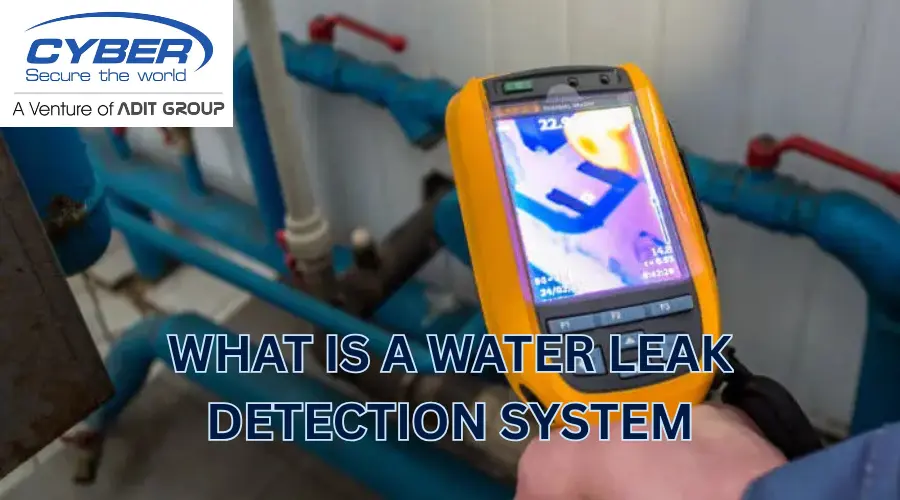
A water leak detection system is a set of tools, devices, and software designed to identify the presence, location, and severity of water leaks in pipes, buildings, or distribution networks. These systems range from simple moisture detection units placed under appliances to sophisticated network-wide platforms that analyse flow data in real time.
The primary purpose is to detect leaks at the earliest possible stage — before they cause major water damage or result in significant losses.
Who Uses These Systems?
- Water utilities managing large distribution networks
- Facility managers overseeing commercial or industrial buildings
- Property owners looking to protect their homes from plumbing issues
- Engineers working on infrastructure or pipeline projects
- Smart city planners focused on sustainable use of water resources
2. Why Water Leaks Are a Serious Global Problem
The scale of global losses from leakage is staggering. In many cities, up to 30% of treated water never reaches the end user — escaping through cracks, faulty joints, and ageing infrastructure along the way.
Understanding the causes helps explain why early identification matters so much.
Common Causes of Water Leaks
- Corrosion in ageing water pipe networks
- High water pressure that stresses pipe joints
- Ground movement causing underground main fractures
- Faulty installation of plumbing fittings
- Freezing temperatures that split water pipe sections
- Tree root intrusion into buried water pipe segments
The Impact of Undetected Leaks
- Increased water stress on communities facing supply shortages
- Higher energy costs from pumping water that never reaches consumers
- Structural water damage to buildings and foundations
- Contamination risk when groundwater enters cracked pipes
- Financial loss for utilities due to non-revenue water
These consequences make it clear that minimising water wastage through early identification is not optional — it is essential. Minimizing water wastage and mitigating water losses must be central goals for every operator and facility manager.
3. How Water Leakage Detection Works
Modern water leakage detection relies on a combination of physical hardware, data communication, and analytical software. The process of detecting water anomalies begins at the device level and ends with an actionable alert or automated response.
Core Components
a) Sensors
A water leak sensor forms the core of any detection setup. Different types monitor different variables — here are the main ones:
- Moisture detection units identify the presence of water at a surface or beneath flooring.
- Flow monitors track changes in water flow and flag unexpected rises or drops.
- Pressure monitors observe variations in water pressure that may indicate a breach.
- Acoustic devices listen for the distinctive sounds that leaking water produces.
b) Detection Module
A leak detection module receives data from those field devices and applies algorithms to determine whether a genuine issue exists. It filters out false alarms and confirms the presence of a real problem before alerting operators.
c) Water Leak Alarm
Once a problem is confirmed, the water leak alarm notifies the relevant personnel through SMS, email, or a dashboard alert. Some advanced setups trigger an automatic water shut-off to limit the spread of water damage.
d) Communication Network
All components connect to central platforms via wired connections, Wi-Fi, cellular networks, or LoRaWAN — depending on the environment and scale of the water network.
4. Detection Methods: How Systems Find Leaks
Different environments call for different detection methods. Here is a look at the most widely used approaches in the industry.
4.1 Acoustic Leak Detection
Acoustic leak detection is one of the most trusted and widely deployed methods for identifying problems in underground water systems. It works by capturing the sound created as pressurised water escapes from a crack or joint.
Key tools used in acoustic water leakage surveys include:
- Listening sticks and ground microphones for manual, point-by-point inspection
- Leak noise correlators — devices that compare sound recordings at two separate points to calculate the location of the leak mathematically
- Overnight loggers that record acoustic data when ambient noise is lowest
Acoustic methods offer excellent detection accuracy and precise leak location capability, especially in metallic pipelines where sound travels efficiently.
4.2 Flow-Based Detection
Flow-based systems monitor water flow across the network and flag deviations from expected patterns. A sudden rise in overnight water flow — when usage should be minimal — is a classic indicator of a hidden problem.
This approach is commonly applied in district metered areas (DMAs) within water distribution networks, where it is effective for detecting leaks early.
4.3 Pressure-Based Detection
Every loss of water through a crack reduces the local water pressure. By continuously monitoring pressure at key points in a water pipeline, engineers can spot drops that suggest a breach has occurred.
Pressure management also helps reduce stress on ageing infrastructure, and it forms a key part of pipeline leak detection best practice — lower pressure means fewer new fractures develop over time.
4.4 Smart Water Leak Detection (IoT)
Smart smart water leak detection combines connected devices, cloud platforms, and artificial intelligence to enable real-time, continuous monitoring across entire networks. This is the cutting edge of water leak detection technology today.
Benefits of smart systems include:
- Remote visibility of the water network via web or mobile dashboards
- Automated detection of anomalies without manual intervention
- Historical trend analysis to identify recurring issues
- Integration with existing building management or SCADA systems
The data collected by IoT devices enables water utilities to move from reactive repairs to proactive control of losses.
4.5 Moisture Detection
Moisture detection focuses on identifying water presence at surfaces, within walls, or beneath raised floors. This method is especially useful in commercial buildings, data centres, and server rooms.
A moisture sensor can be placed in high-risk areas such as:
- Under kitchen or bathroom sinks
- Near water tanks and HVAC units
- Beneath raised floors in IT facilities
- Around water heaters and boilers
5. Underground Water Leak Detection
Identifying problems in buried water mains is one of the most challenging tasks in infrastructure management. Underground water leak detection requires specialist equipment, trained technicians, and careful analysis.
Why It Is Difficult
- Leaks are hidden beneath roads, pavements, and structures
- Soil composition affects how sound and pressure signals travel
- Identifying leaks in underground pipelines requires noise correlation tools
- Access for repair often requires significant excavation
Equipment Used for Underground Surveys
Teams rely on a range of tools to identify and locate underground problems:
- An underground water leak detector uses ground microphones to pick up the sounds of escaping water
- Leak noise correlators calculate the precise location of a leak by comparing time differences in sound arrival
- Tracer gas injection locates very small fractures that produce no audible sound
- Ground-penetrating radar maps subsurface structures to support visual inspection
With the right leak detection equipment, survey teams can get an accurate water leak location and narrow the search area significantly — reducing excavation costs and minimising disruption to roads and public spaces.
6. Water Leak Detection Equipment Overview
Selecting the right tools for identifying water leaks depends on the environment, scale, and budget of the project. Here is an overview of the core tools available.
Hardware
- Water leak detector: Portable handheld units for spot-checking pipes and joints
- Leak detection sensor arrays: Multiple units covering large floor areas or pipe runs
- Water leak alarm panels: Central units that aggregate alerts from multiple points
- Leak noise correlators: Advanced acoustic tools for underground surveys
- Flow meters and data loggers: Track usage patterns to support leak identification
Software and Analytics
- SCADA integration platforms for utility-scale monitoring water systems
- AI-powered analytics that improve detection accuracy — many modern leak detection systems are based on machine learning models that refine themselves over time
- Mobile apps connected to smart water leak detection hardware
- Cloud dashboards for reviewing alerts, data, and reports remotely
7. Water Distribution Networks: Managing Leaks at Scale
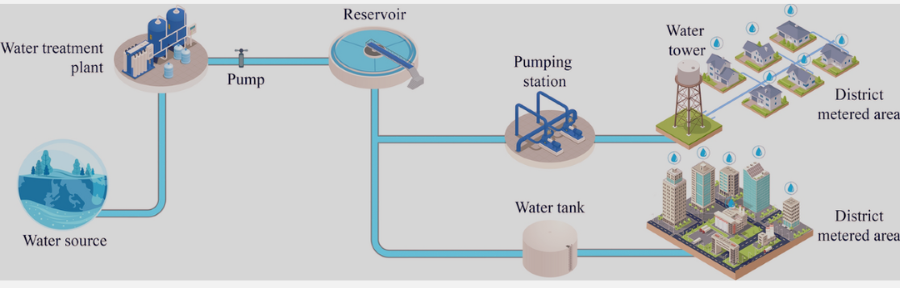
For water utilities, leaks in supply infrastructure represent one of the largest sources of non-revenue loss. A reliable water supply depends on well-maintained infrastructure — and the right strategy can reduce losses by up to 50%.
Challenges in Distribution Networks
- Losses in a network are often spread across hundreds of kilometres of supply pipe
- Ageing infrastructure increases the risk of multiple simultaneous problems
- Underground access is costly and disruptive
- Identifying the exact location of a leak requires precise, specialised tools
Strategies for Effective Leak Management
Utilities and operators use a combination of approaches to manage these losses:
- Pressure zoning to reduce stress on vulnerable pipe sections
- District metering for isolating and assessing flow in defined areas
- Regular acoustic surveys to pinpointing leaks before they worsen
- Smart meters for tracking water usage at individual property level
- Real-time monitoring platforms linked to field devices across the network
- Leak identification teams trained in using correlators and advanced diagnostic tools
8. Water Leakage Detection for Buildings and Facilities
Beyond distribution networks, water pipe leakage within buildings is a significant concern. Even a slow plumbing leak can cause hidden damage over months if left undetected.
High-Risk Areas in Buildings
- Plant rooms and mechanical service areas
- Roof spaces and areas around HVAC systems
- Raised computer floors in data centres
- Basement areas prone to groundwater ingress
- Kitchen and bathroom zones in residential or hospitality settings
Preventing Property Damage
The most effective way to prevent water damage in facilities is through automated, continuous monitoring. A properly installed leak system can:
- Identify unusual water activity at any hour
- Trigger a water leak alarm to notify the relevant team immediately
- Support leak location efforts with zone-based sensor data
- Control automatic shut-off valves to stop the flow at source
- Provide audit logs for insurance and compliance purposes
Placing a water leak sensor in critical locations is one of the simplest and most cost-effective precautions a building manager can take.
9. Smart Water Leak Detection: The IoT Revolution
Smart water leak detection is transforming how utilities and facility teams manage their infrastructure. By connecting physical devices to intelligent platforms, teams can monitor water consumption, identify anomalies, and respond faster than ever before.
How Smart Systems Work
- Connected units monitor water pressure, flow, and moisture around the clock
- Data is transmitted wirelessly to a cloud-based platform
- Analytics engines compare live readings against expected baselines
- When anomalies arise, the system triggers alerts and logs the event
- Operators can review data remotely and dispatch repair teams quickly
Key Advantages of Smart Monitoring
Continuous monitoring offers major operational and financial benefits:
- Faster identification of problems means lower repair costs
- Remote access reduces the need for manual site visits
- Long-term data supports water quality improvements
- Integration with existing systems simplifies management
- Automated detection reduces reliance on manual inspections
The data collected by IoT nodes is one of the most valuable assets a modern water operator can have — enabling smarter decisions and more efficient use of resources.
10. Benefits of Investing in Leak Detection
A reliable water leakage detection system delivers measurable returns across every type of organisation. Whether managing a single building or an entire water network, the benefits are significant.
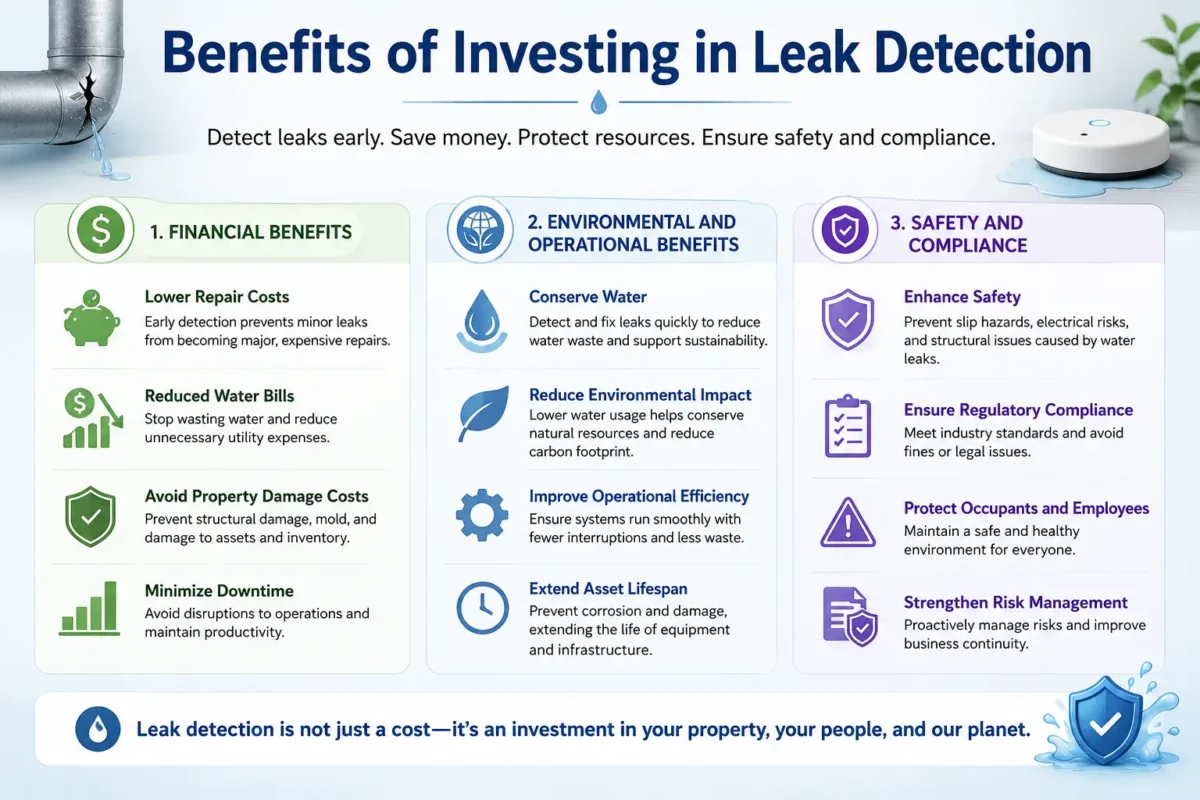
Financial Benefits
- Reduced water bills through early identification of hidden losses
- Lower emergency repair costs by catching problems early
- Avoidance of property damage claims through proactive protection
- Revenue recovery for utilities through non-revenue reduction
Environmental and Operational Benefits
- Support for sustainable water management and conservation targets
- Better water quality by preventing contamination from pipe fractures
- Lower energy consumption through reduced pumping volumes
- Extended lifespan of aging water infrastructure
- Contribution to addressing global water stress
Safety and Compliance
- Regulatory compliance in industries where water usage must be monitored
- Reduced risk of structural failure from long-term hidden leakage
- Better data for insurance, reporting, and audit purposes
11. Choosing the Right System for Your Needs
There is no single solution that fits every situation. The right choice depends on the size of the environment, the type of infrastructure, and the level of risk involved.
For Homeowners and Small Properties
- A compact water leak sensor placed under sinks and near appliances works well.
- A standalone water leak alarm with Wi-Fi connectivity offers peace of mind.
- Smart detectors connected to a mobile app allow remote monitoring.
For Commercial Buildings and Facilities
- A centralised system with a leak detection module and monitoring network covers large areas.
- Zone-based devices allow teams to identify the location of a leak quickly.
- Integration with building management systems improves response coordination.
For Water Utilities and Infrastructure
- A comprehensive approach combining acoustic surveys, flow monitoring, and pressure management.
- Use of smart water leak detection platforms for continuous, network-wide visibility.
- Advanced leak detection solutions tailored for water distribution systems.
- Regular use of correlators and portable field survey tools for on-site inspections.
- Investment in data analytics to support long-term strategy and network resilience.
12. Conventional vs. Advanced Leak Detection
Traditional approaches to identifying water problems have long relied on visual inspection, manual flow readings, and reactive maintenance. These conventional leak approaches are increasingly insufficient for modern infrastructure demands.
Limitations of Conventional Methods
- Visual inspection misses leaks hidden underground or within walls
- Manual surveys are time-consuming and labour-intensive
- Problems often go unnoticed until significant damage has occurred
- Response times are slow, allowing losses to accumulate
Advantages of Advanced Leak Detection
- Precise water leak detection tools locate problems with far greater speed and accuracy
- Automated detection reduces the burden on field teams
- Real-time alerts enable immediate response
- Accurate leak data reduces unnecessary excavation
- Continuous monitoring replaces periodic manual inspections
The shift from conventional to modern water leak detection technology is one of the most impactful investments water system operators can make. It also plays a key role in mitigating losses at both local and systemic levels.
13. The Future of Water Leakage Detection
The industry is evolving quickly. New technologies are making water leakage detection more accurate, more affordable, and more accessible than at any point before.
Emerging Trends
- AI and machine learning for automated anomaly identification with high detection accuracy
- Digital twin models that simulate water network behaviour to predict vulnerable points
- Satellite and drone-based survey tools for large or remote water pipeline networks
- Fibre optic sensing for continuous water leak detection sensing along buried conduits
- Integrated platforms combining flow, pressure, water quality, and acoustic data
- Blockchain-based water usage audit trails for accountability and transparency
The Road to Sustainable Resource Conservation
Modern water infrastructure must do more with less. Efficient leak detection systems are central to achieving that goal. By reducing losses, utilities can serve more customers, lower carbon emissions, and build resilience against future water scarcity.
Comprehensive leak prevention — from a single building’s plumbing to city-wide networks — is the foundation of responsible resource conservation for the decades ahead.
Conclusion
Whether the challenge is a hidden plumbing leak in a residential property or undetected losses across an entire water distribution network, the right water leakage detection system makes all the difference.
Modern detection methods — from acoustic water leakage surveys to smart IoT platforms — give teams the tools they need to find problems early, respond quickly, and prevent costly damage. Investing in advanced leak detection today is an investment in a more efficient, resilient, and water-secure future.
By embracing precise water leak detection technology, organisations of all sizes can protect their infrastructure, conserve resources, and contribute meaningfully to global water security.